
Everything Southern Wisconsin homeowners need to know about pricing, preparing, marketing, and selling a home with confidence in today's Wisconsin real estate market.
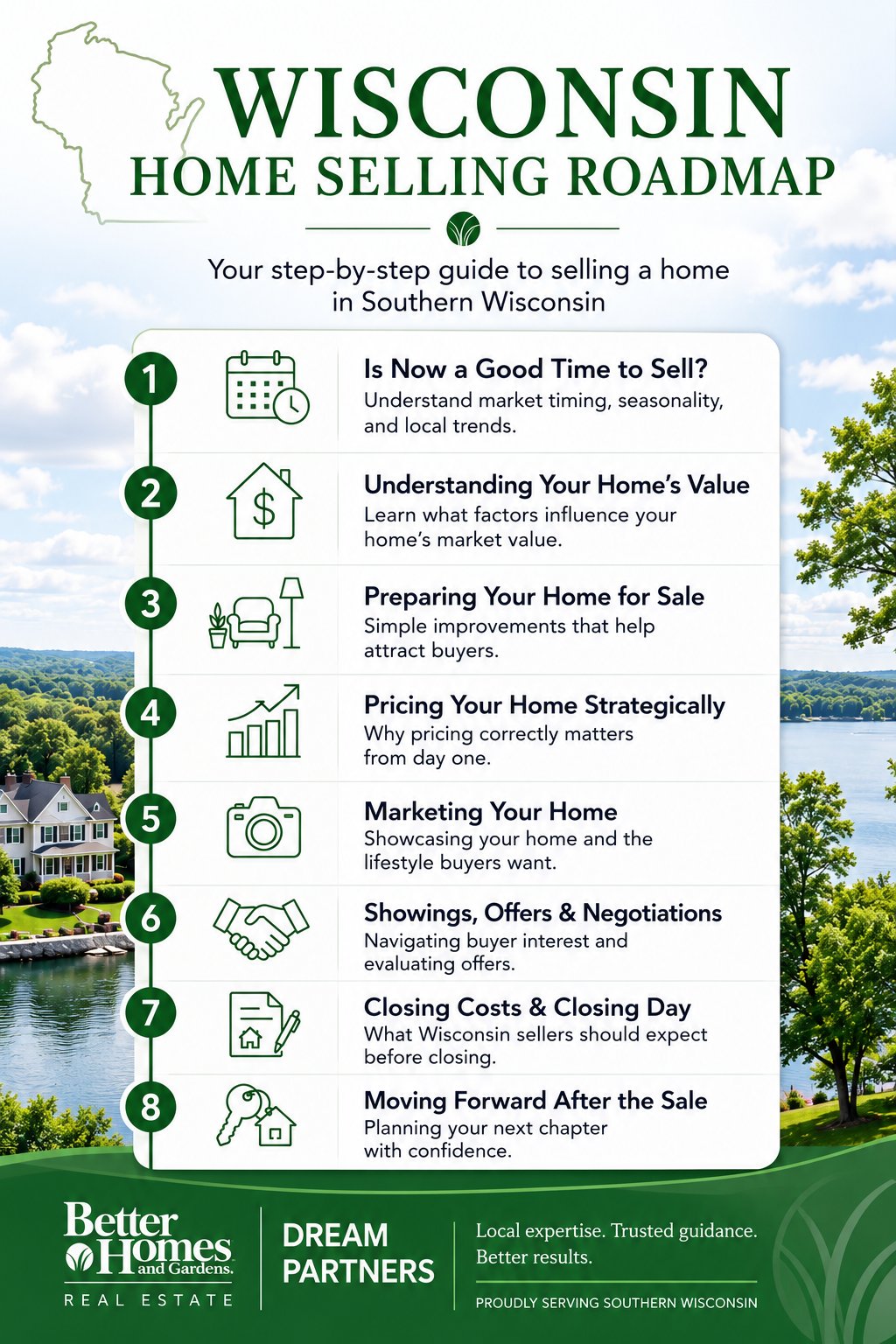
Selling a home is more than putting a sign in the yard and waiting for offers. The Wisconsin real estate market is influenced by local housing demand, seasonal trends, interest rates, neighborhood conditions, and the unique characteristics of each community.
Whether you're selling in Janesville, Stoughton, Waunakee, Cambridge, Edgerton, Lake Geneva, or another Southern Wisconsin community, understanding your local market can help you make more informed decisions. Factors such as pricing, preparation, marketing, and timing all play a role in achieving a successful sale. Local market conditions can have a significant impact on your results.
Every home sale is different. A lakefront property near Lake Geneva may attract a different type of buyer than a family home in Waunakee or a historic property in Cambridge. Understanding what buyers value in your specific market can help you position your home more effectively and avoid common mistakes.
The good news is that homeowners who take time to understand the process are often better prepared to make confident decisions. From determining your home's value and preparing it for the market to evaluating offers and navigating closing day, each step can have a meaningful impact on your overall results. Understanding your home's current market value is often the best place to begin.
One of the first questions homeowners ask is whether now is the right time to sell. While no two real estate markets are exactly alike, understanding local conditions can help you determine the best timing for your goals.
In Southern Wisconsin, the housing market often experiences seasonal patterns. Spring and early summer are traditionally busy periods, as families prefer to move before a new school year begins and buyers are more active. Communities such as Janesville, Stoughton, Waunakee, Cambridge, and Edgerton often see increased buyer activity during these months, resulting in more showings and, in some cases, stronger competition among buyers.
However, the best time to sell is not always the busiest time to sell. Market conditions, inventory levels, mortgage rates, and your personal circumstances all play an important role. In some years, homes listed during the fall or winter may face less competition from other sellers, allowing well-prepared properties to stand out and attract serious buyers.
Many homeowners also wonder what the hardest month is to sell a house. Historically, late fall and the holiday season can see fewer active buyers, but that doesn't mean homes stop selling. Buyers searching during these periods are often highly motivated and may need to move for work, family, or other life changes. A well-priced and properly marketed home can sell successfully during any season.
Rather than focusing solely on the calendar, sellers should consider local market conditions in their specific community. Factors such as neighborhood demand, school districts, home condition, pricing strategy, and available inventory often have a greater impact on a successful sale than the month alone.
If you're considering selling your home in Southern Wisconsin, reviewing current market trends and recent comparable sales can help you determine whether now is the right time to make your move. Every market is different, and understanding your local opportunities can help you maximize both your timeline and your results.
One of the most important steps in the home selling process is determining your property's market value. Pricing a home correctly from the beginning can significantly impact the number of showings you receive, the offers you attract, and ultimately how much your home sells for.
Many homeowners start by looking at online home value estimates, but these tools can only provide a general starting point. Automated valuations often cannot account for important factors such as recent updates, property condition, lot size, location within a neighborhood, school district boundaries, or unique features that buyers may value.
A professional market analysis looks beyond algorithms and compares your home to similar properties that have recently sold in your area. For example, buyer demand and pricing trends can vary greatly between communities such as Janesville, Stoughton, Waunakee, Cambridge, Edgerton, and Lake Geneva. Even homes within the same city may have different values based on neighborhood, amenities, and market conditions.
When evaluating a home's value, real estate professionals typically consider several factors, including:
Recent comparable sales in the area
Current competing listings
Property size and layout
Age and condition of the home
Renovations and improvements
Lot characteristics and location
Local market demand and inventory levels
Many sellers assume pricing high leaves room for negotiation, but an overpriced home can often spend more time on the market and may ultimately sell for less than a properly priced property. Buyers today have access to extensive market information and can quickly identify homes that appear overpriced compared to similar listings.
A well-researched pricing strategy helps position your home competitively while maximizing its value. Understanding what buyers are willing to pay in your local market is one of the most important factors in creating a successful home sale.

Selling a home starts long before it hits the market. A well-prepared home often attracts more buyers, generates stronger offers, and creates a better first impression both online and in person.
Before listing your property, focus on the areas that make the biggest impact:
Not every home needs major renovations before selling. In many Southern Wisconsin communities, strategic improvements can provide a better return than expensive remodeling projects.
At Better Homes and Gardens Real Estate Dream Partners, we help homeowners throughout Janesville, Stoughton, Waunakee, Cambridge, Edgerton, Lake Geneva, and surrounding areas identify the updates that are most likely to appeal to today's buyers. The goal isn't perfection—it's helping your home make a strong first impression and stand out in the market.

Setting the right price is one of the most important decisions you'll make when selling your home. A well-priced property can attract more buyers, generate stronger interest, and potentially lead to better offers.
Many homeowners assume pricing high leaves room for negotiation, but overpricing can cause a home to sit on the market longer and receive fewer showings. Today's buyers have access to extensive online information and often compare multiple properties before scheduling a tour.
When determining a listing price, several factors should be considered:
Every community is different. Buyer demand in Janesville, Stoughton, Waunakee, Cambridge, Edgerton, and Lake Geneva can vary based on inventory levels, school districts, amenities, and overall market activity.
At Better Homes and Gardens Real Estate Dream Partners, we use local market knowledge and data-driven analysis to help sellers determine a competitive pricing strategy. The goal is to position your home where it attracts serious buyers while maximizing your return on investment.
A strong pricing strategy doesn't just help your home sell—it helps create momentum from the moment your listing goes live.

Marketing plays a significant role in how quickly a home sells and the level of buyer interest it receives. In today's market, most buyers begin their search online, often forming their first impression before ever stepping inside a property.
Successful marketing isn't simply about making a home visible—it's about helping buyers connect with the property and envision themselves living there. Homes that are presented well often generate more interest, attract more qualified buyers, and create stronger opportunities for sellers.
For many buyers, the appeal extends beyond the house itself. Communities such as Janesville, Waunakee, Stoughton, Cambridge, Edgerton, and Lake Geneva each offer unique lifestyles, amenities, and local character that can influence purchasing decisions. Understanding how to showcase both the property and the surrounding community can help a home stand out in a competitive market.
As the #1 lifestyle real estate brand, Better Homes and Gardens Real Estate recognizes that buyers aren't just purchasing a home—they're investing in a way of life. The most effective marketing helps tell that story while creating meaningful connections between buyers, the property, and the community they may soon call home.

Many sellers focus heavily on preparing and pricing their home, but once the property is on the market, the next stage begins: attracting buyers, scheduling showings, reviewing offers, and negotiating terms.
Every offer is different. While price is important, sellers should also consider financing, contingencies, closing timelines, and the overall strength of the buyer's position. In some situations, the highest offer may not necessarily be the strongest offer.
Negotiations are a normal part of the real estate process and can involve repairs, inspections, financing terms, possession dates, and other details. Understanding the full picture can help sellers make informed decisions and avoid unnecessary surprises.
The goal is to find the right balance between maximizing value and creating a smooth path to closing.
📋 Wisconsin Seller Tip:
Wisconsin homeowners are generally required to complete a Real Estate Condition Report (RECR) when selling residential property.

Closing day is the final step in the home selling process, but there are several important milestones that occur beforehand. Once an offer is accepted, buyers typically complete inspections, secure financing, and work through any remaining contingencies before the transaction moves toward closing.
Many homeowners are surprised to learn that selling a home involves costs beyond their mortgage payoff. Common expenses may include title-related fees, transfer fees, negotiated buyer concessions, prorated property taxes, and other transaction-related expenses.
Understanding these costs early can help sellers estimate their net proceeds and prepare for a successful closing. While every transaction is unique, knowing what to expect can reduce stress and help avoid last-minute surprises.

Selling a home is often more than a financial transaction—it's the beginning of a new chapter. Whether you're relocating within Southern Wisconsin, downsizing, upgrading to a larger home, or moving out of state, planning ahead can help make the transition smoother.
Before closing day arrives, it's helpful to organize moving plans, transfer utilities, update important records, and create a timeline for your next housing needs. Having a clear plan in place can reduce stress and make the process more manageable.
Every homeowner's journey is different, but understanding the steps involved and preparing early can help you move forward with confidence. By taking a thoughtful approach to pricing, preparation, marketing, negotiations, and closing, you'll be better positioned to achieve a successful sale and begin the next stage of your journey.
1. What is the best time of year to sell a house in Wisconsin?
Spring and early summer are often considered the most active seasons for home sales in Wisconsin, as many buyers want to move before the next school year. However, the best time to sell depends on local market conditions, inventory levels, and your personal goals. Well-priced homes can sell successfully throughout the year.
2. How long does it take to sell a house in Wisconsin?
The timeline varies based on market conditions, pricing, location, and property condition. In a strong market, some homes receive offers within days, while others may take several weeks or months. Sellers should also factor in the time needed for inspections, financing, and closing after accepting an offer.
3. How is my home's value determined?
A home's value is influenced by factors such as location, size, condition, updates, lot characteristics, and recent sales of comparable properties. Local market demand and inventory levels can also impact value. A professional comparative market analysis provides a more accurate estimate than most online valuation tools.
4. What costs do sellers typically pay when selling a home in Wisconsin?
Seller expenses may include real estate commissions, title-related fees, transfer fees, prorated property taxes, negotiated buyer concessions, and any agreed-upon repairs or credits. The exact amount varies depending on the transaction and the terms negotiated between the buyer and seller.
5. Should I make repairs before selling my home?
Not every home requires major renovations before listing. However, addressing deferred maintenance, completing minor repairs, and improving overall presentation can help attract buyers and reduce potential concerns during inspections. The best improvements often depend on the property's condition and local market expectations.
6. Can I sell my current home and buy another at the same time?
Yes. Many Wisconsin homeowners coordinate the sale of their current home with the purchase of their next property. The process may involve contingent offers, delayed closings, temporary housing, or other strategies designed to help align both transactions and reduce stress during the move.
7. Do I need a real estate agent to sell a house in Wisconsin?
Wisconsin homeowners can sell a property without an agent, but many choose professional representation to help with pricing, marketing, negotiations, contracts, inspections, and closing requirements. Selling a home involves legal and financial considerations that can benefit from professional guidance.
8. What can I do to increase my home's value before selling?
Simple improvements often provide the best return on investment. Fresh paint, landscaping, decluttering, deep cleaning, minor repairs, and improving curb appeal can make a strong first impression. In many cases, presenting a clean, well-maintained home is more important than undertaking expensive renovations.
This guide was created by Better Homes and Gardens Real Estate Dream Partners, a Southern Wisconsin real estate brokerage based in Janesville and serving buyers and sellers throughout Rock, Dane, Green, Jefferson, and Walworth Counties.