Stuck between adding square footage and shopping for a bigger place? You are not alone. Many Janesville homeowners reach this crossroads when life changes outpace their floor plan. The right answer depends on your equity, the local market, project costs, and how you want to live day to day. In this guide, you’ll compare costs, timelines, and resale impact, then walk through a simple worksheet to see whether moving up or remodeling makes more sense in Janesville. Let’s dive in.
Move up vs remodel: your Janesville reality
Recent portal summaries place Janesville’s median values in the high 200s to low 300s, depending on source and reporting period. Different sites use different data windows, so treat those as directional rather than transaction-grade. For a decision this big, you need a neighborhood-specific CMA that reflects closed comps and current inventory in your price band.
A CMA from a local agent clarifies what your home should sell for, how long it may take, and what buyers in your segment expect. The National Association of Realtors explains how market statistics and comps support pricing decisions, which is why a CMA is step one if you are leaning toward selling and buying up. You can learn more about market data snapshots from the NAR field guide on quick stats at the NAR market statistics overview.
Compare costs and likely ROI
You want realistic ranges for both remodeling and selling. The annual Cost vs. Value report for the East North Central region offers grounded benchmarks for Wisconsin.
Highlights from the 2025 report:
- Garage door replacement: about $4.7k cost with roughly $12.5k resale value, recouping around 268 percent. (East North Central Cost vs. Value)
- Steel entry door: about $2.4k cost with roughly $5.3k resale value, recouping around 216 percent.
- Minor midrange kitchen remodel: about $28k cost with a resale value that often meets or exceeds the spend regionally, making it a strong bang-for-buck project.
- Fiber-cement siding replacement: about $21k to $24k with roughly 101 to 114 percent recoup.
- Basement finish (midrange): about $52k with roughly 71 to 79 percent recoup.
- Primary-suite addition (midrange): about $170k with roughly 32 percent recoup.
Takeaway: targeted, midrange projects tend to deliver better resale lift for the dollar, while large structural additions usually return a much smaller share of the cost.
Build your side-by-side worksheet
This simple exercise shows you which path funds your goals with fewer surprises.
Step A: Estimate net proceeds if you sell
- Estimate your sale price with a local CMA.
- Subtract your mortgage payoff and any liens.
- Subtract selling costs. Nationally, total commission is often in the 5 to 6 percent range, plus closing costs and any pre-list improvements. Commissions are negotiable, and line items vary by deal.
- The result is your estimated cash for the down payment and reserves on your next home.
A market data refresher from NAR explains why your agent’s comps matter for accurate pricing and timing. See the NAR quick stats guide.
Step B: Price your remodel and financing
- Get 2 to 3 contractor bids for exactly what you plan to do. Do not rely on national averages alone.
- Typical midrange kitchen remodels often fall in the $20k to $60k band, with 6 to 10 weeks of construction after planning according to national ranges noted by HomeAdvisor. Basements often run tens of thousands of dollars with 6 to 12 week timelines. Always add 10 to 20 percent contingency.
- Decide how to fund the project: HELOC, home equity loan, or a cash-out refi. The CFPB’s HELOC vs home equity loan explainer outlines pros and cons. If you are buying and renovating the next home, an FHA 203(k) may bundle purchase and rehab into one loan.
Step C: Compare monthly cost and rate impact
As of early 2026, the average 30-year fixed rate in the Freddie Mac PMMS hovered near 6.0 percent, though it varies weekly. Rate changes shift your monthly payment and can tilt the math between remodeling and buying up. Track current averages at the Freddie Mac PMMS.
Local case examples to test your plan
These Janesville scenarios show how the math and lifestyle factors interact. Your numbers will differ, but the logic holds.
Case A: Historic downtown charm, compact plan
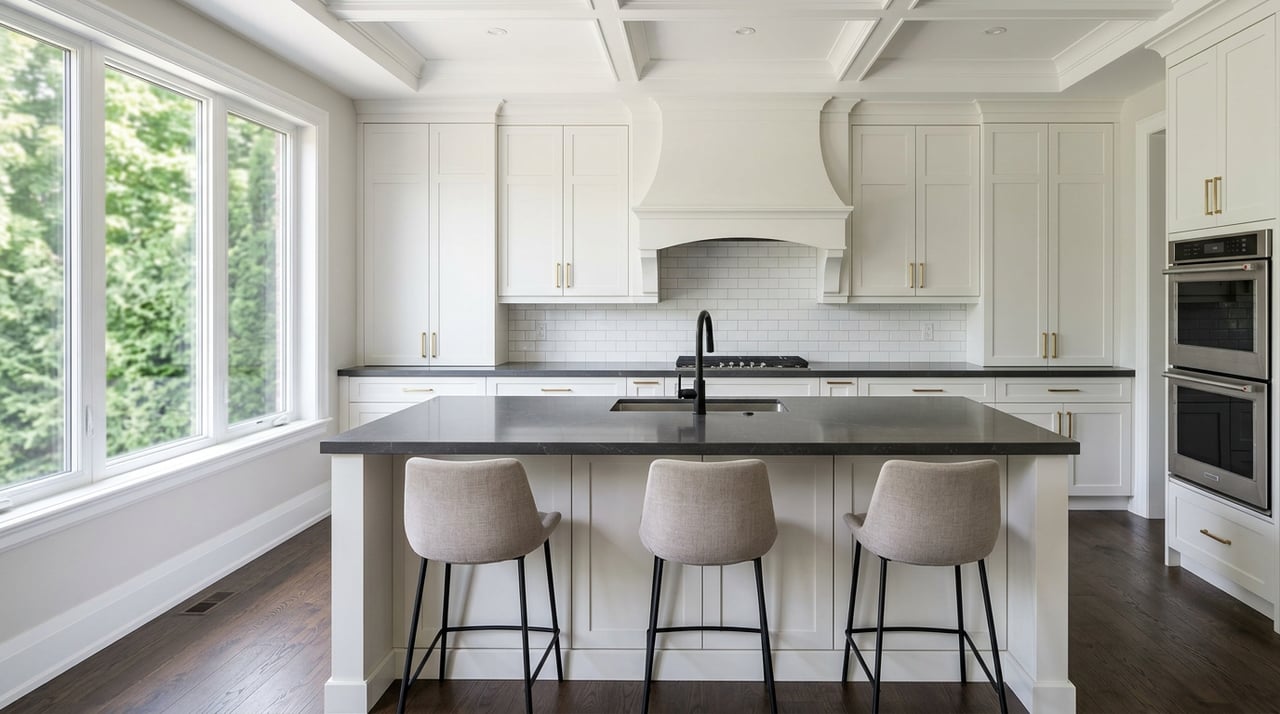
You love your older home near Courthouse Hill or along Court Street, and it is structurally sound but dated. A midrange minor kitchen remodel around $28k can refresh the heart of the home. In this region, the Cost vs. Value report shows minor kitchen projects often recoup a high share of cost, which can boost appeal if you plan to sell in 1 to 3 years. If your layout works and you can live through a short project, a targeted kitchen update plus professional staging is often faster and cheaper than moving.
Case B: Need a second primary suite
You want a second suite or lots of new square footage. A midrange primary-suite addition around $160k to $170k typically recoups a small fraction of cost regionally. If your current equity plus affordable financing can get you into a larger home that already fits your needs, moving up often delivers more livable area and better long-term value for the same or less cash than paying for a large addition with limited resale return.
Case C: Immediate space, minimal disruption
Your family needs a functional hangout and another bath now. Finishing a basement or adding a modest midrange bath is usually faster than an addition and can be financed with a HELOC or home equity loan. Regionally, basement finishes recoup roughly 70 percent of cost. If you cannot face months of showings and a move, remodeling for lifestyle can be the right choice even if it does not fully pay for itself at resale.
Timelines, permits, and disruption
Be honest about how your household handles construction. Kitchens and basements often take weeks to a few months after design and ordering. Build in extra time for permits, selections, and contractor lead times. Wisconsin’s Department of Safety and Professional Services outlines building department delegation and permitting, which helps you confirm what your project requires. Check the Wisconsin DSPS permit delegation page.
Two quick planning tips:
- Pack a temporary kitchen or onsite storage plan so daily life keeps moving.
- Order long-lead items early to avoid mid-project delays.
Taxes and ongoing costs to check
- Capital gains exclusion: Many owner-occupants can exclude up to $250k of gain - or $500k if married filing jointly - if they meet ownership and use tests. For details and exceptions, see this plain-English overview of Section 121 at LegalClarity. Consult your tax advisor for your situation.
- Property taxes: Remodeling that adds value can change assessments. Moving may place you in a different taxing district. Review payment details and contact information at the Rock County Treasurer’s property tax page.
When moving up makes sense
- Your equity easily covers the down payment and reserves for a larger home in your target area.
- The features you want - more bedrooms, a bigger lot, or modern layout - would be costly or impractical to add to your current home.
- A large addition would recoup a small fraction of cost, while a larger replacement home offers better long-term utility.
- You prefer to avoid months of construction and want a faster lifestyle upgrade.
When remodeling makes sense
- You plan to stay 5 years or longer and value upgrades you will enjoy.
- Your layout mostly works, and targeted updates - kitchen, curb appeal, bath refresh - can meet your needs.
- The move-up premium is steep in your segment, and your current location is hard to replace.
- You can finance improvements comfortably and manage short-term disruption.
Quick decision checklist
Use these prompts to map your next step:
- Do you plan to stay more than 5 years? Longer horizons favor remodeling you will use.
- How much equity would a sale unlock? Get a CMA and a net-proceeds estimate. See the NAR quick stats guide.
- What do 2 to 3 local contractor bids say your exact scope will cost? Compare that to the premium to buy your next home.
- Can your household handle 6 to 12 weeks of disruption? Kitchens and basements often land in that range per HomeAdvisor.
- Will permits or zoning be required? Start with the Wisconsin DSPS delegation page and your municipal building office.
- Will property taxes, insurance, or utilities shift significantly after a remodel or move? Confirm via the Rock County Treasurer.
- What are today’s rates doing to monthly payments? Track the Freddie Mac PMMS.
What a pro consultation should deliver
A clear go-or-no-go plan comes from a structured consultation. You should expect:
- CMA with recent closed comps in your exact neighborhood and a pricing range.
- Net-proceeds worksheet from expected sale price to estimated cash available.
- A prioritized presale-improvement list with ballpark costs and expected value lift, using Cost vs. Value as a baseline and refining with local bids.
- A financing overview and warm handoffs to lenders for HELOCs, cash-out refis, or purchase loans, plus guidance using CFPB’s HELOC vs loan explainer.
- Side-by-side timelines for listing prep and marketing versus a remodel schedule.
How BHGRE Dream Partners helps
When you choose to sell, presentation pays. BHGRE Dream Partners pairs local market expertise with in-house staging and design through MDR Design Co. and a full showroom at The MDR House. That means curated paint, lighting, and styling choices that meet buyer expectations fast. If you decide to remodel first, our design-forward team can advise on finishes that align with regional buyer taste. If you buy up, our agents help you target neighborhoods and homes that fit your lifestyle - and we can connect you with trusted contractors and window treatments through Budget Blinds for a smooth move-in.
Ready for a clear plan tailored to your home, your equity, and your timeline? Schedule a Consultation with Better Homes & Gardens Real Estate Dream Partners and get a data-backed path to your next chapter.
FAQs
How do I estimate my Janesville home’s value accurately?
- Request a neighborhood-specific CMA that cites recent closed comps, then pair it with a net-proceeds worksheet to see your likely cash after selling.
What remodels add the most resale value in our region?
- According to the East North Central Cost vs. Value report, smaller curb-appeal items and minor midrange kitchen updates typically recoup the highest share of cost.
How long will a midrange kitchen remodel take?
- Plan on roughly 6 to 10 weeks of construction after design and ordering, plus extra time for selections and permitting as noted by HomeAdvisor.
What financing options exist for remodeling?
- Common choices include a HELOC, a fixed-rate home equity loan, or a cash-out refinance, each with trade-offs outlined by the CFPB.
Will remodeling change my property taxes in Rock County?
- It can. Confirm assessment impacts and billing details with the Rock County Treasurer’s office before you start your project.